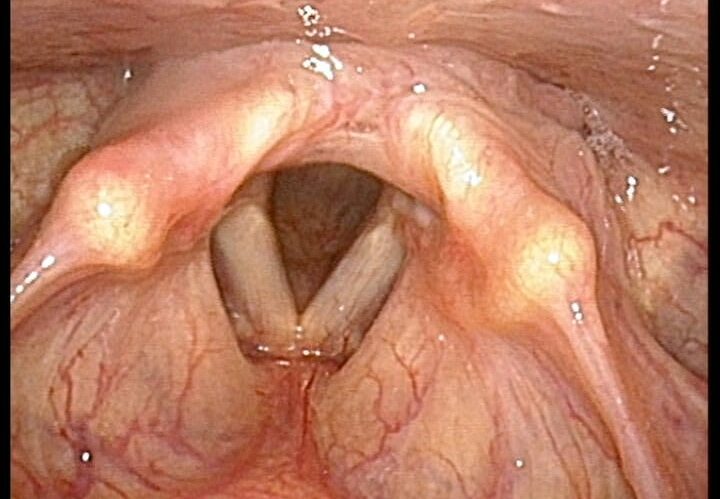
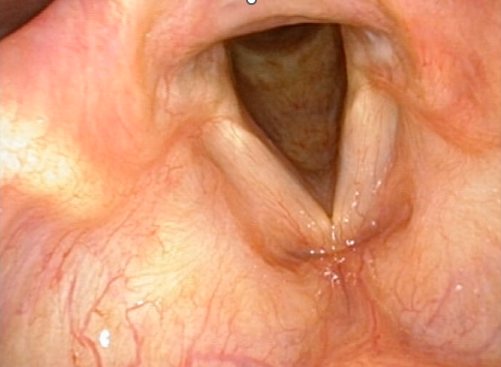
Spasmodic dysphonia, also called laryngeal dystonia, is a neurological voice disorder. Involuntary spasms of the laryngeal muscles make the voice strained, effortful or interrupted.
In the more common adductor type, the muscles that close the vocal folds spasm and the voice sounds tight and strangled. In the abductor type, the muscles that open the vocal folds are affected and the voice breaks into breathy or weak sounds.
The condition can be mentally and socially burdensome, and it can limit work in professions where speaking is essential.
How is it diagnosed?
The diagnosis is based on listening to the voice and examining the larynx with a flexible endoscope while you speak. Other causes of a strained voice, such as hyperfunctional dysphonia or tremor, are ruled out.
Video: Botox injection for spasmodic dysphonia through a channel endoscope, 1 min
Video: EMG-guided Botox injection for spasmodic dysphonia, 2 min
Botox treatment
The standard treatment is botulinum toxin (Botox) injections into the affected vocal muscles. Botox temporarily relaxes the overactive muscles so the voice flows more smoothly.
The injections are often given with extremely thin needles under EMG control, or through the nose directly inside the larynx (transnasal intralaryngeal injection). This allows very small, precise doses to reach the targeted muscles. The procedure is done in the outpatient clinic without sedation and takes only a few minutes.
How long does Botox last?
The effect usually lasts about three months, after which the injection can be repeated. In the first days after an injection the voice may be breathy and swallowing liquids can feel different.
Is there a permanent option?
For adductor spasmodic dysphonia, myoneurectomy surgery can give a long-lasting result. See the Myoneurectomy page.
Before myoneurectomy
After myoneurectomy
Frequently asked questions
Do I need to be put to sleep for the Botox injection?
No. The injection is given in the outpatient clinic without sedation and takes only a few minutes.
How often is the injection repeated?
The effect usually lasts about three months, after which the injection can be repeated.
Are there side effects?
In the first days after an injection the voice may be breathy, and swallowing liquids can feel different.