Zenker's diverticulum and cricopharyngeal stenosis
What are these conditions?
Zenker’s diverticulum, also called a pharyngeal pouch, is a pouch that forms at the back of the throat where the muscular wall is weak, just above the upper oesophageal sphincter. Cricopharyngeal stenosis is a narrowing of that sphincter. It is more common in older adults.
Symptoms
Both conditions make swallowing difficult. Typical symptoms are food sticking in the throat, regurgitation of undigested food, chronic cough, choking and food or liquid entering the airway. Gurgling in the neck, bad breath and weight loss can also occur.
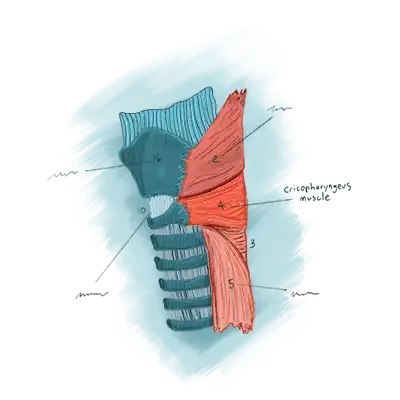
Cricopharyngeal muscle
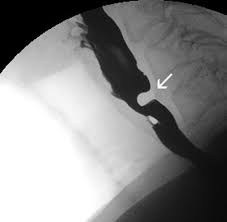
Cricopharyngeal bar obstructing food and fluids (X-ray)
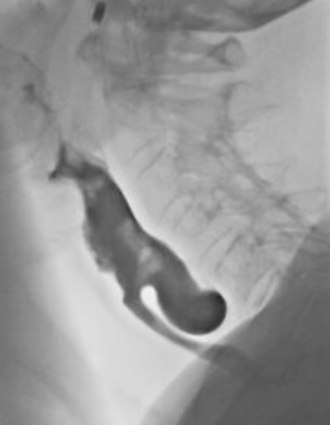
A swallowing videofluorography and an endoscopic examination usually confirm the diagnosis.
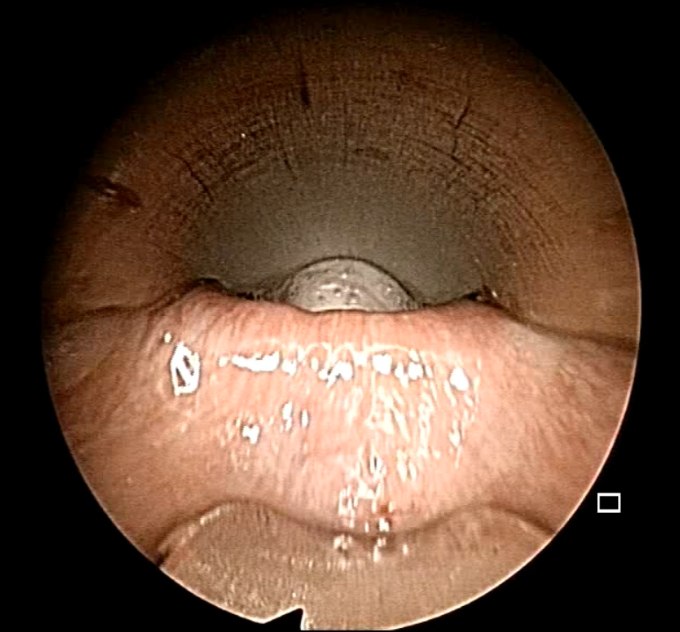
Endoscopic view of a Zenker’s diverticulum: the pouch and the wall that separates it from the oesophagus.
Treatment
Surgery aims to restore normal swallowing by relieving the obstruction. For Zenker’s diverticulum, the wall between the pouch and the oesophagus is divided. For cricopharyngeal stenosis, a targeted myotomy cuts the tight muscle.
The procedures are usually done endoscopically through the mouth, with no external incision. They are generally performed under general anaesthesia, and in selected cases even under local anaesthesia.
Recovery
With extensive experience in pharyngo-oesophageal surgery, we tailor the procedure to each patient’s anatomy, aiming for minimal discomfort and rapid recovery. Patients usually start with a soft or liquid diet for a few days.
Frequently asked questions
Will I have a scar on my neck?
Usually not. The procedures are usually done endoscopically through the mouth, with no external incision.
Is it done under general anaesthesia?
Generally yes. In selected cases it can be done under local anaesthesia.
What can I eat after the operation?
Patients usually start with a soft or liquid diet for a few days.