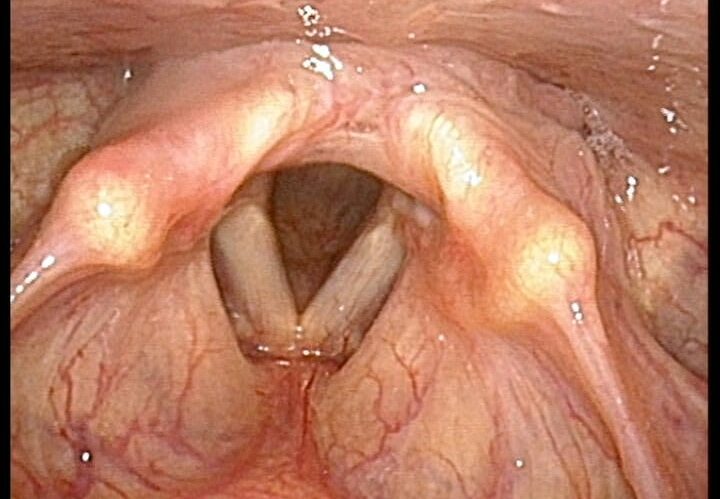
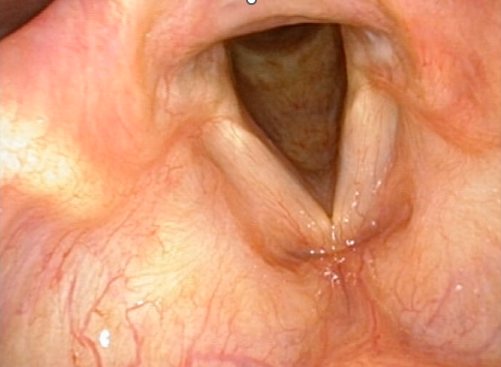
Myoneurectomy is for patients diagnosed with adductor spasmodic dysphonia, where the voice is tight and strained because the muscles that close the vocal folds spasm. For these patients it can be a decisive operation. Read more: Spasmodic dysphonia.
What is myoneurectomy?
Myoneurectomy removes a specific vocal fold muscle, the thyroarytenoid muscle, together with its nerve branches. The aim is to restore natural vocal fold function, improve voice quality and reduce other disturbing symptoms. The effect is similar to botulinum toxin injections, but the effect of myoneurectomy is usually permanent.
An experienced surgeon carefully identifies and removes the active muscle while preserving the surrounding healthy tissue. This precision minimises side effects and gives the best possible outcome. The operation is done through the mouth under general anaesthesia.
Results and recovery
About 60% of patients have permanent relief after the first operation. In the others, symptoms may return within six months, when the removed nerve branches grow back. The operation can then be repeated up to twice. If symptoms return and further surgery is not wanted or possible, botulinum toxin can be used again. At this stage, lower doses are often enough and their effect lasts longer.
The voice is usually breathy for some weeks after surgery before it settles.
Video lecture: myoneurectomy for adductor spasmodic dysphonia, 17 min
Frequently asked questions
Is the result permanent?
About 60% of patients have permanent relief after the first operation.
What if my symptoms come back?
The operation can be repeated up to twice. Botulinum toxin can also be used again, and lower doses are then often enough, with a longer effect.
How will my voice be after surgery?
The voice is usually breathy for some weeks before it settles.