
Sleep apnoea surgery
On this page: What is sleep apnoea · When is surgery an option · Assessment and sleep endoscopy (DISE) · Surgical options · Recovery · Results and follow-up
What is sleep apnoea?
Sleep apnoea is a condition in which breathing stops repeatedly during sleep. It often causes snoring and daytime tiredness, and in the long term raises the risk of high blood pressure and heart problems. Other common signs are pauses in breathing noticed by a partner, waking up gasping, morning headaches and poor concentration.
When is surgery an option?
Lifestyle changes and devices such as CPAP (continuous positive airway pressure) can be effective. Some patients, however, cannot tolerate CPAP or do not benefit from it enough, and may benefit from surgery. Also, some patients may prefer a permanent solution surgically rather than living with CPAP.
Surgery aims to remove or reduce obstruction in the airway, improve airflow and restore normal breathing during sleep. Depending on where the airway collapses, procedures may target the soft palate, uvula, tonsils, tongue base or nose.
Sleep apnoea surgery often reduces snoring as well, so the same operation can also work as snoring surgery. I perform sleep apnoea and snoring surgery in Helsinki.
Assessment and sleep endoscopy (DISE)
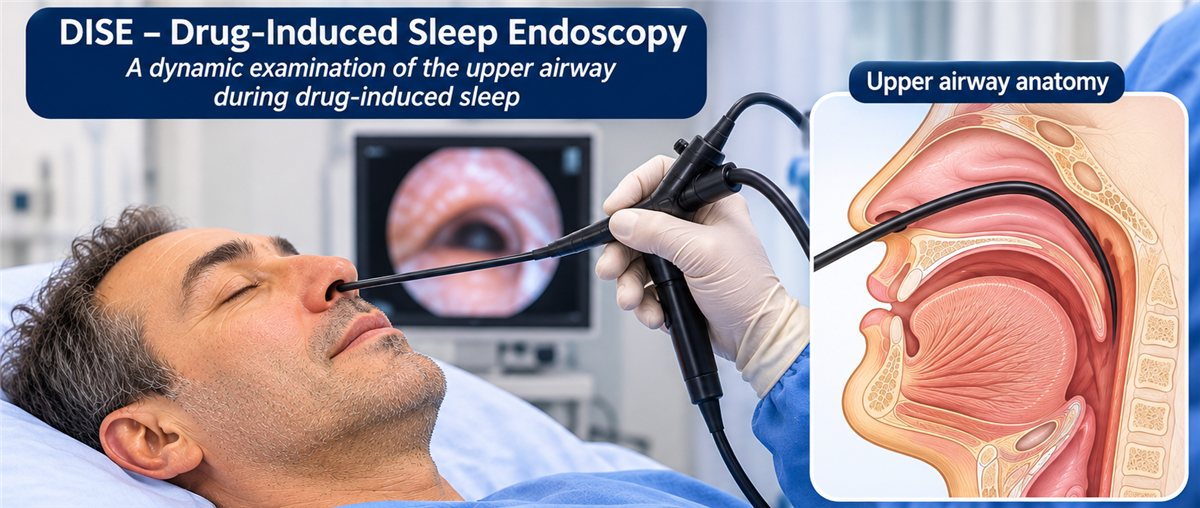
Before surgery we assess where your airway narrows: an examination of the nose and throat while you are awake, a sleep study, and sleep endoscopy (DISE). In DISE, a thin endoscope passed through the nose shows which structures close the airway during medically induced sleep, so the operation can target the right level. I perform DISE at Mehiläinen.
Surgical options
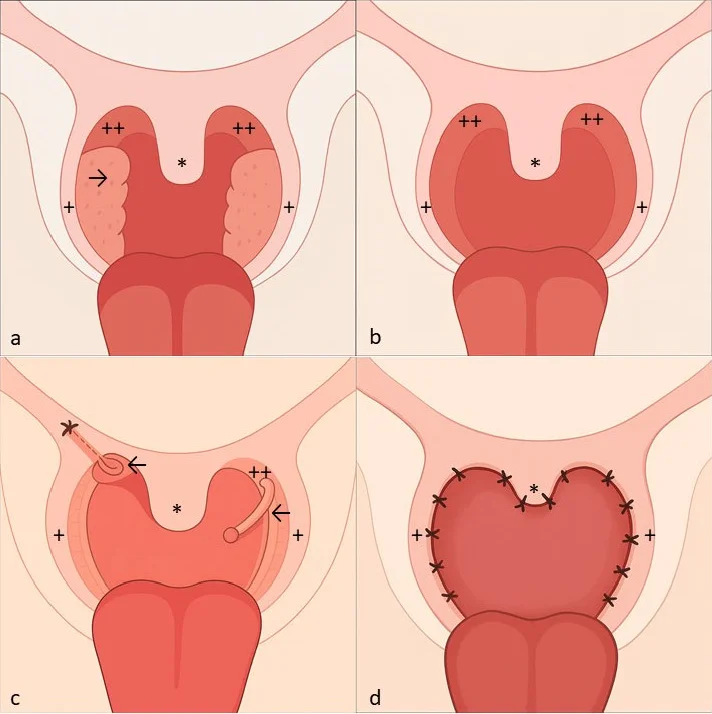
The operation is chosen according to the DISE findings. All of these are done through the mouth under general anaesthesia, with no external scars. Tonsillectomy is part of most palate operations if the tonsils are still present.
Tonsillectomy. Large tonsils can narrow the airway. In adults with large tonsils, removing them can greatly improve or even cure sleep apnoea. The operation takes about 30 minutes.
Uvulopalatal flap. For obstruction mainly at the soft palate and uvula. The uvula is folded forwards and upwards onto the soft palate and stitched in place, widening the airway behind the palate. Less tissue is removed than in traditional palate surgery (UPPP), which lowers the risk of voice change or fluids entering the nose when swallowing. It is less suitable for a very long or thick palate.
Lateral pharyngoplasty. For collapse of the side walls of the throat, which is common in sleep apnoea. Muscles in the side walls are repositioned and stitched so the walls become firmer and the airway wider. Variants include expansion sphincter pharyngoplasty.
Barbed reposition pharyngoplasty (BRP). For obstruction at the soft palate and side walls. Instead of cutting tissue away, barbed self-anchoring stitches pull the side walls and the palate outwards and upwards, without knots. Because little tissue is removed, recovery is often gentler than after traditional palate surgery. The operation takes about an hour.
Other procedures. Nose, tongue base and multilevel surgery when the obstruction is at several levels.
Recovery
- The throat is sore for about one to two weeks. Pain is often worst around days 5 to 7.
- Regular painkillers and soft, cool food help. Eating normally helps healing.
- Ear pain is common and comes from the throat.
- After BRP, a feeling of tightness in the throat is common for a while, and rarely a stitch needs trimming.
- Plan for about two weeks off work.
- Most adults go home the same day or after one night in hospital.
Bleeding. The main risk is bleeding in the first two weeks while the throat heals. Any bleeding from the mouth after surgery needs urgent contact with the hospital.
Results and follow-up
A follow-up sleep study a few months after surgery measures the improvement. A personalised approach helps patients sleep better, reduces symptoms and improves overall health.
Frequently asked questions
Usually yes. The operation is chosen according to the DISE findings, which show where your airway closes during sleep. DISE is not always needed when large tonsils are clearly the cause.
Plan for about two weeks off work.
A follow-up sleep study a few months after surgery measures the improvement.
No referral is needed for a private consultation at Mehiläinen or Terveystalo. Bring your sleep study results if you have them.
If you have your own private health insurance, the insurance company usually covers the assessment and surgery. Check the terms of your policy.
Laser and radiofrequency treatments may reduce mild snoring, but their effect on sleep apnoea is smaller and often short-lived. When the tonsils or throat walls cause the obstruction, surgery is usually more effective. DISE helps choose the right treatment.
The throat is sore for about 1–2 weeks, and time off work is usually about two weeks. Most patients go home the same day or the next morning. A follow-up sleep study after a few months measures the result.
Snoring is clearly reduced in most patients when the obstruction is treated at the right level. The result depends on where the obstruction is, body weight and nasal congestion.
Dr Ahmed Geneid, guided by sleep endoscopy (DISE).