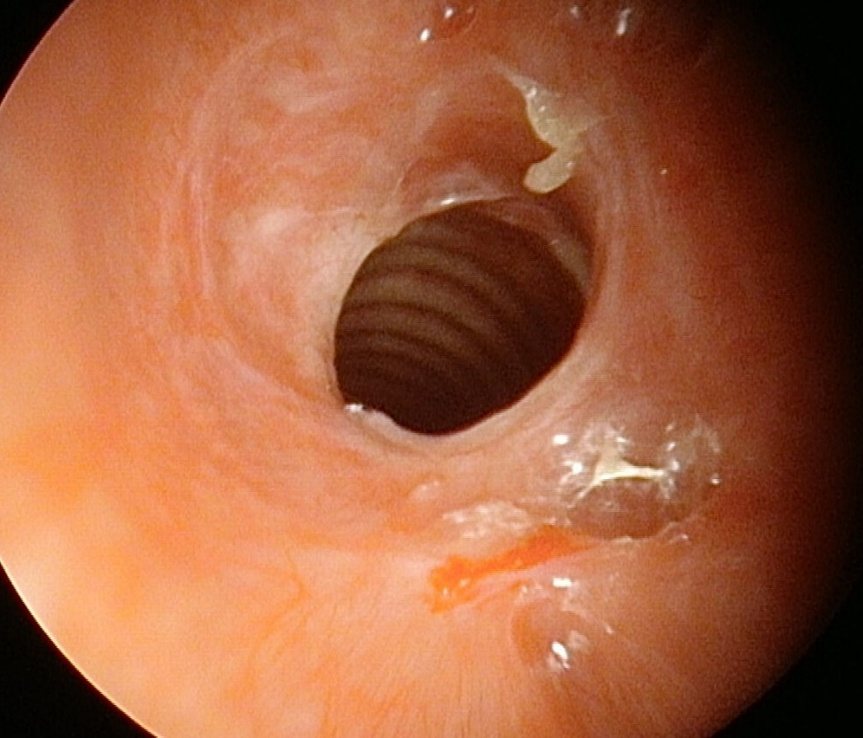
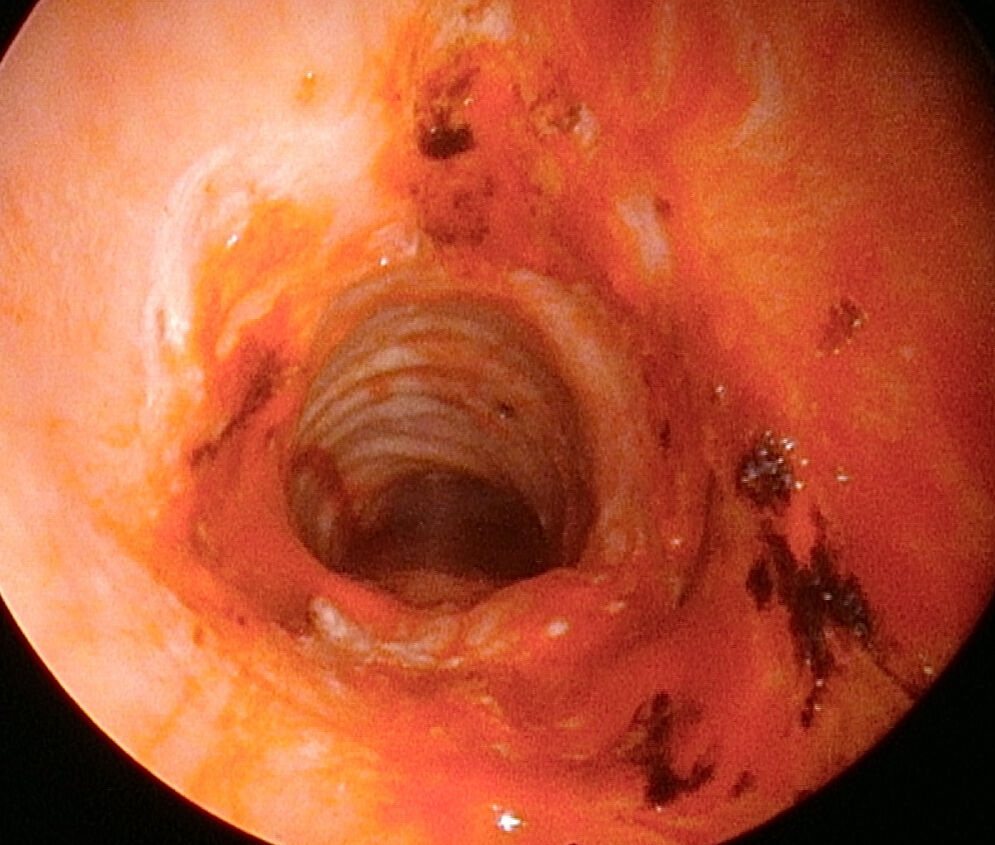
Subglottic stenosis is a narrowing of the airway just below the vocal folds. It can follow a breathing tube or tracheostomy, be linked to autoimmune disease, or have no known cause (idiopathic subglottic stenosis), which mainly affects women.
Symptoms
The narrowing causes shortness of breath, noisy breathing (stridor) and a persistent cough. It is sometimes mistaken for asthma.
Airway after laser and balloon dilatation (end result)
Treatment
Treatment widens the airway and restores normal breathing while protecting the delicate tissues of the larynx. The techniques are chosen according to the cause and severity:
Laser surgery precisely removes scar tissue and opens the airway.
Balloon dilatation stretches the narrowed segment.
Corticosteroid injections reduce inflammation and help prevent the scar from returning.
These procedures are usually done endoscopically, without external incisions, which allows quicker recovery. They are often combined.
Will it come back?
Subglottic stenosis can recur, so regular follow-up is needed and some patients need repeated treatment.
Frequently asked questions
Could my breathing problem be asthma?
Subglottic stenosis is sometimes mistaken for asthma. Typical symptoms are shortness of breath, noisy breathing (stridor) and a persistent cough.
Who gets subglottic stenosis?
It can follow a breathing tube or tracheostomy, be linked to autoimmune disease, or have no known cause. The idiopathic form mainly affects women.
Is there a neck incision?
Usually not. The procedures are usually done endoscopically, without external incisions, which allows quicker recovery.
Will I need more than one treatment?
Possibly. Subglottic stenosis can recur, so regular follow-up is needed, and some patients need repeated treatment.