
Voice deepening surgery (voice masculinisation) in Helsinki
Lowering the pitch of the voice
Voice deepening surgery permanently lowers the pitch of the voice. Voice plays an important role in personal identity and in how others perceive us. Some people feel their natural speaking voice is too high for their gender identity or expectations.
Who may benefit
- Cisgender men with an unusually high voice
- Transgender men whose voice remains high despite testosterone therapy
- Non-binary people seeking a more masculine speaking voice
- Patients with mutational falsetto when voice therapy has not been successful
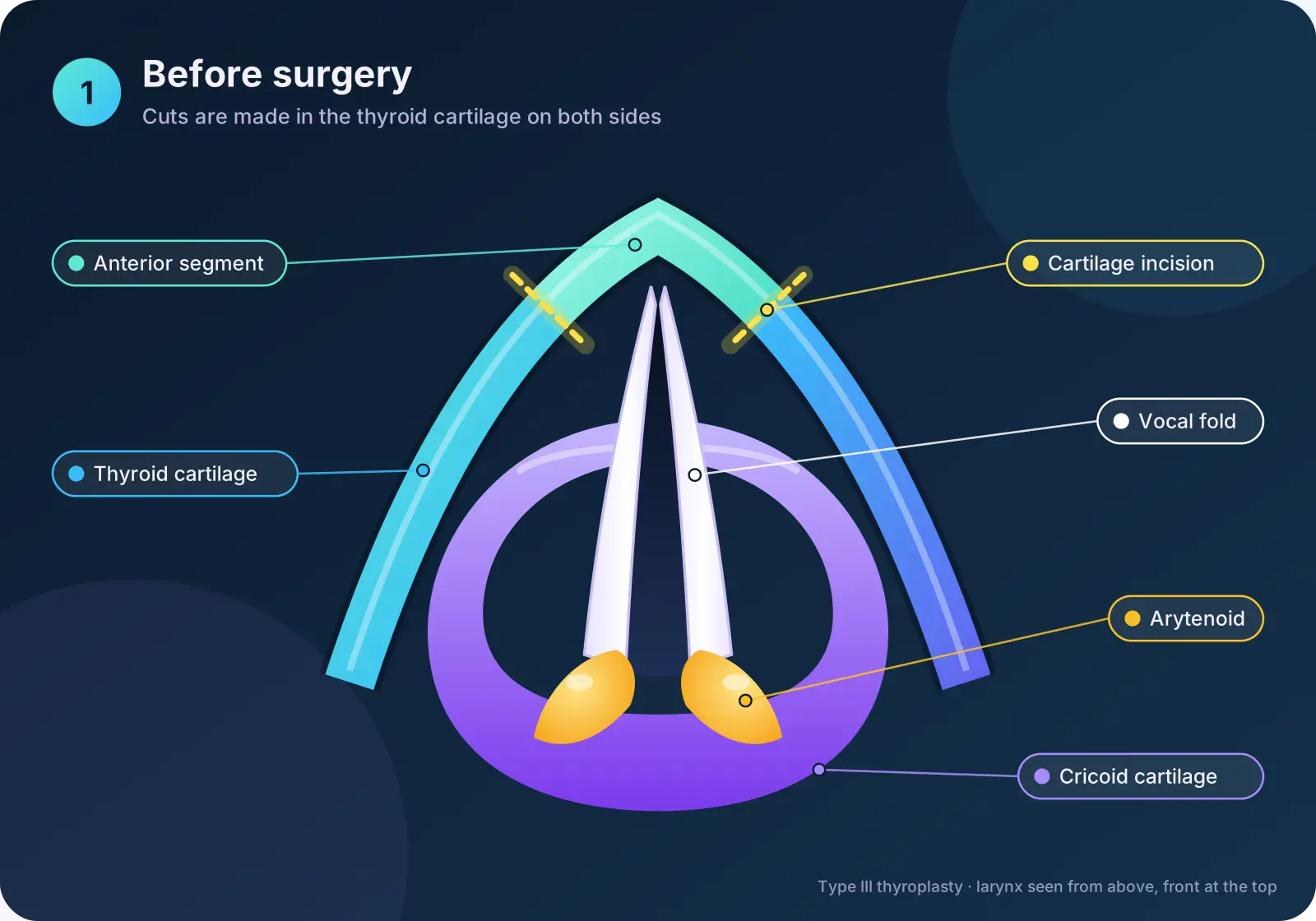
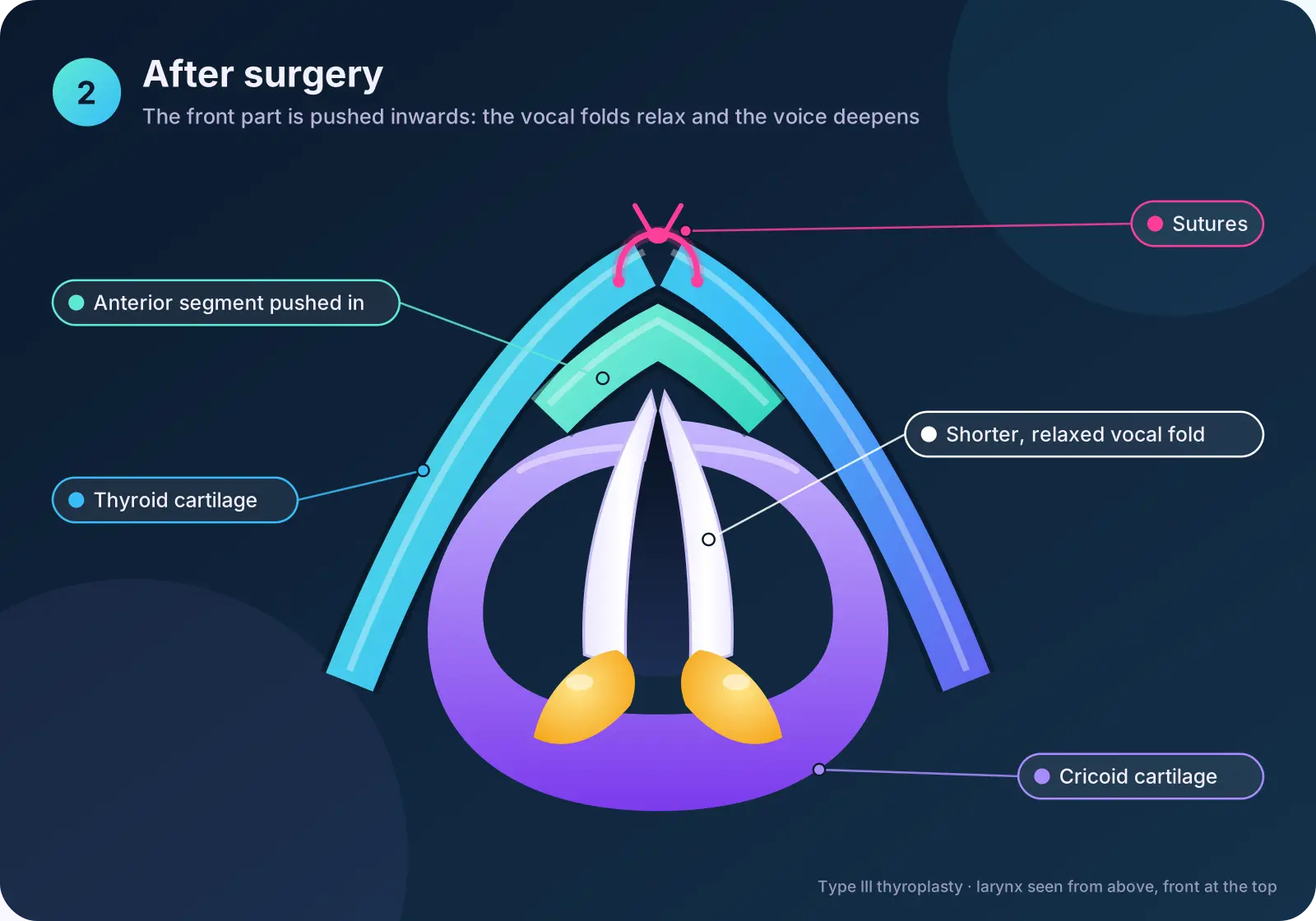
How the surgery works
Voice deepening surgery, also called Type III thyroplasty, lowers the pitch by modifying the thyroid cartilage of the larynx. The front part of the thyroid cartilage is pushed backwards, which shortens the laryngeal framework and relaxes the vocal folds. They then vibrate at a lower frequency and produce a deeper voice.
The surgery is performed under local or general anaesthesia and takes about 1 to 2 hours. A small incision is made in a natural skin crease on the front of the neck. The cartilage is repositioned and stabilised with sutures, and patients usually go home the same day.
Recovery and results
The procedure is generally well tolerated, and pain after surgery is minimal. Temporary hoarseness, mild throat discomfort or neck swelling may occur. Most patients return to normal daily activities within a few days.
The voice settles gradually over several months, and final results are typically seen after 6 to 8 months. The result is permanent.
Is voice deepening surgery right for you?
Every treatment starts with a consultation and a voice assessment. Your vocal folds are examined with a laryngoscope, and your speaking voice is measured and recorded. We talk through what you hope to achieve and whether surgery, voice therapy or both is the best way to get there. Many people benefit from working with a speech and language therapist before and after surgery to make the most of the new voice.
Risks of voice deepening surgery
As with any operation, there are risks. The voice may be weaker, breathier or less loud for a while after surgery. How much the pitch drops varies from person to person, so an exact result cannot be promised. Infection and bleeding are rare. All risks are discussed in detail at the consultation.
Frequently asked questions
Yes. The cartilage is repositioned and fixed with sutures, so the lower pitch stays. The voice settles over several months, and the final result is usually reached after 6 to 8 months.
The incision follows a natural skin crease on the neck. The scar usually becomes hard to see once it has healed.
Yes. Surgery is usually considered once the voice has stopped changing on testosterone, typically after at least a year.
Short voice rest is advised for the first days.
Yes. Voice deepening surgery is an established operation, known in the medical literature as Type III thyroplasty or relaxation thyroplasty. It was described by Isshiki in the 1970s and is performed by laryngologists who specialise in voice surgery.
The operation is done through a small neck incision, and most patients go home the same day. Temporary hoarseness, mild throat discomfort and neck swelling are common in the first weeks. Rare risks include bleeding, infection, and a voice that is weaker or more breathy than hoped.
The voice usually becomes around 50 to 100 Hz lower. The exact amount depends on the voice you hope for.
The cost depends on the type of anaesthesia and your individual treatment plan. Ask for a price estimate when you book a consultation through the patient portal.
Yes. It is a day surgery, and a stay of three days in Helsinki is enough.