Voice feminisation surgery (glottoplasty) in Helsinki
Raising the pitch of the voice
The pitch of a voice differs substantially between men and women, and voice is a large part of how others perceive us. Pitch-raising surgery, or glottoplasty, raises the speaking pitch permanently.
Who it is for
Trans women whose speaking voice still feels too low, often after voice therapy
Women who find their own voice uncomfortably low and want to lose a deep bass voice
Non-binary people who want a lighter-sounding voice
Several pitch-raising procedures are available. Some are performed under local anaesthesia and some under general anaesthesia. The choice depends on the change you want: a slight rise in pitch, or a substantial change, where the larynx is in a sense “tuned” to produce a female voice.
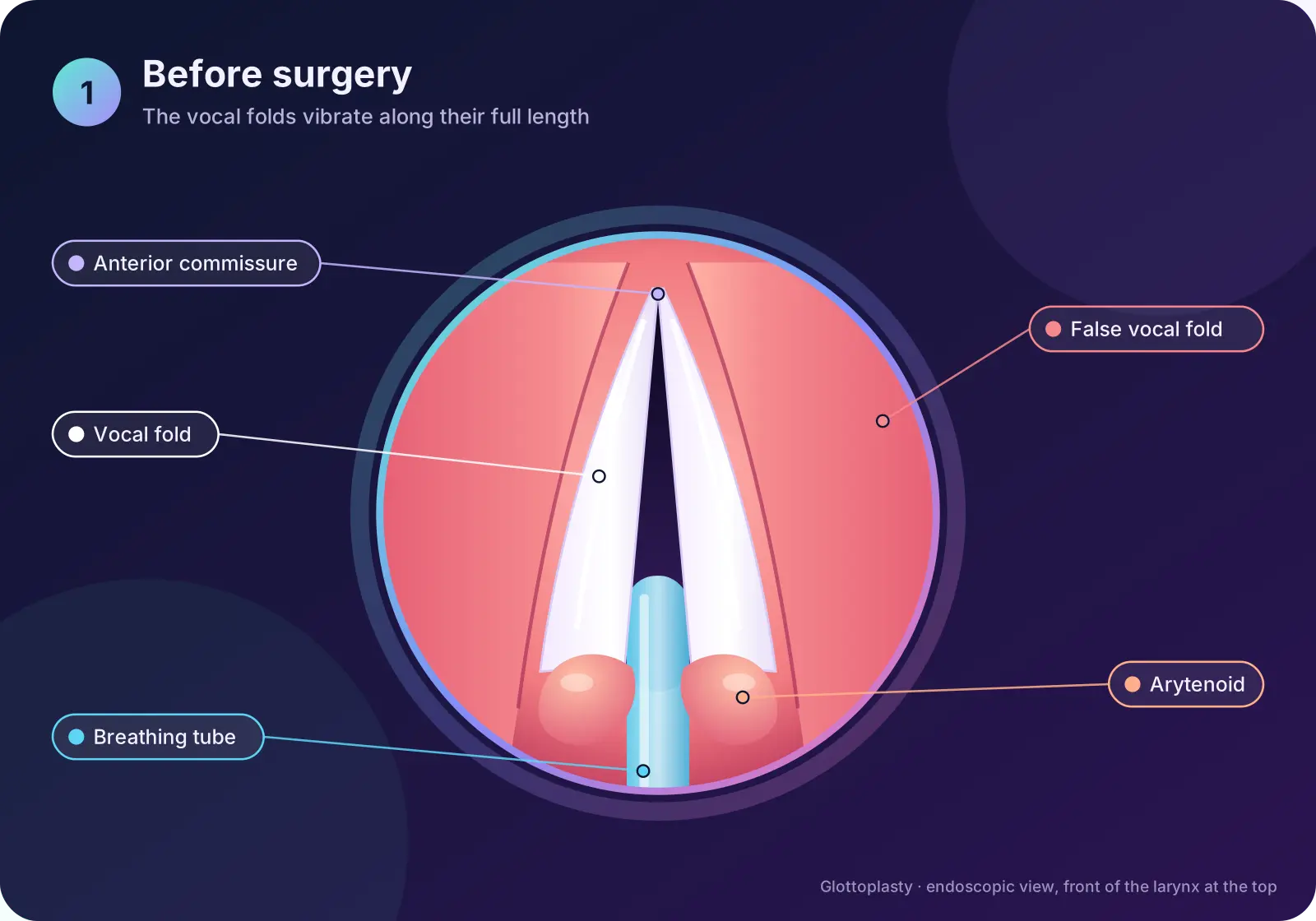
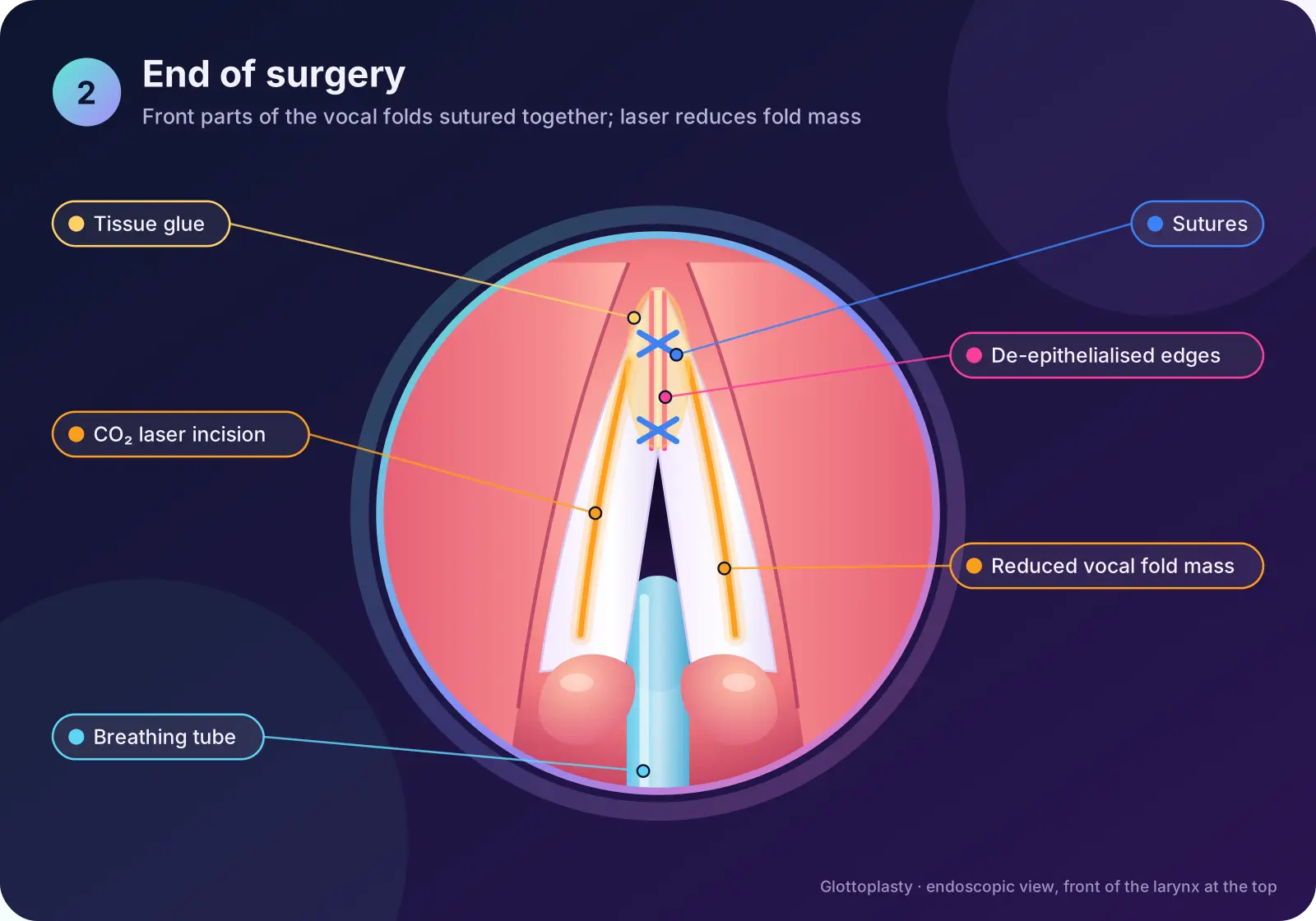
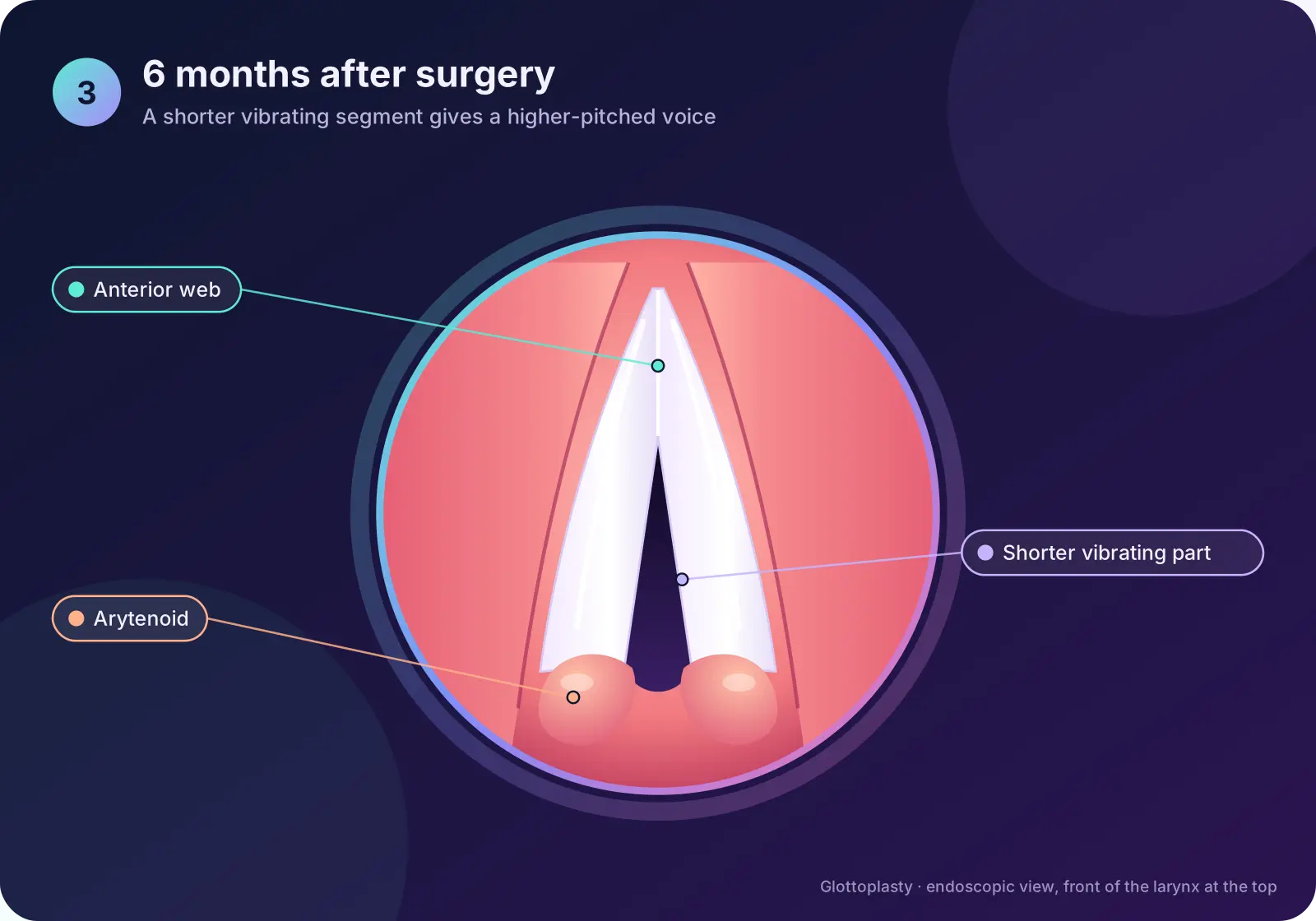
In glottoplasty, the front parts of the vocal folds are joined together. This shortens the part of the vocal folds that vibrates, so the voice sounds higher. The operation is done through the mouth, with no scar on the neck.
Recovery and results
After surgery, strict voice rest is needed for two days, and the voice then develops over several months. Voice therapy with a speech therapist helps you get the most from the new pitch.
Related procedure: Adam’s apple reduction
Many patients combine voice surgery with an Adam’s apple reduction (tracheal shave). This is a day surgery, and the wound heals in about a week. It leaves a small scar that fades over time and at best disappears entirely.
Adam's apple reduction: before and after
Video: voice feminisation surgery (glottoplasty) explained, 4 min
Frequently asked questions
Will my voice sound completely female?
Glottoplasty raises the pitch, but voice therapy is usually needed as well for intonation and resonance.
Is the result permanent?
Yes, glottoplasty gives a permanent change in pitch.
Do I need voice therapy first?
Voice therapy before surgery is recommended but never a must, and it helps decide whether surgery is needed.
Who performs voice feminisation surgery in Finland?
Dr Ahmed Geneid performs glottoplasty for voice feminisation in Helsinki.