
Snoring and snoring surgery
Snoring is the sound made when the soft tissues of the throat vibrate in a narrowed airway during sleep. It is common and becomes more common with age and weight. Snoring on its own is not a disease, but it can be a sign of obstructive sleep apnoea, in which the upper airway repeatedly narrows or closes during sleep. How loud someone snores does not tell whether they have sleep apnoea. Only a sleep study can show that.
Where does snoring come from?
The sound can come from the soft palate and uvula, the tonsils, the side walls of the throat, the base of the tongue or the epiglottis. Often the narrowing is at more than one level. A blocked nose can add to snoring, but treating the nose alone rarely stops it. Being overweight, alcohol or sedatives in the evening, and sleeping on your back make snoring worse.
When should snoring be examined?
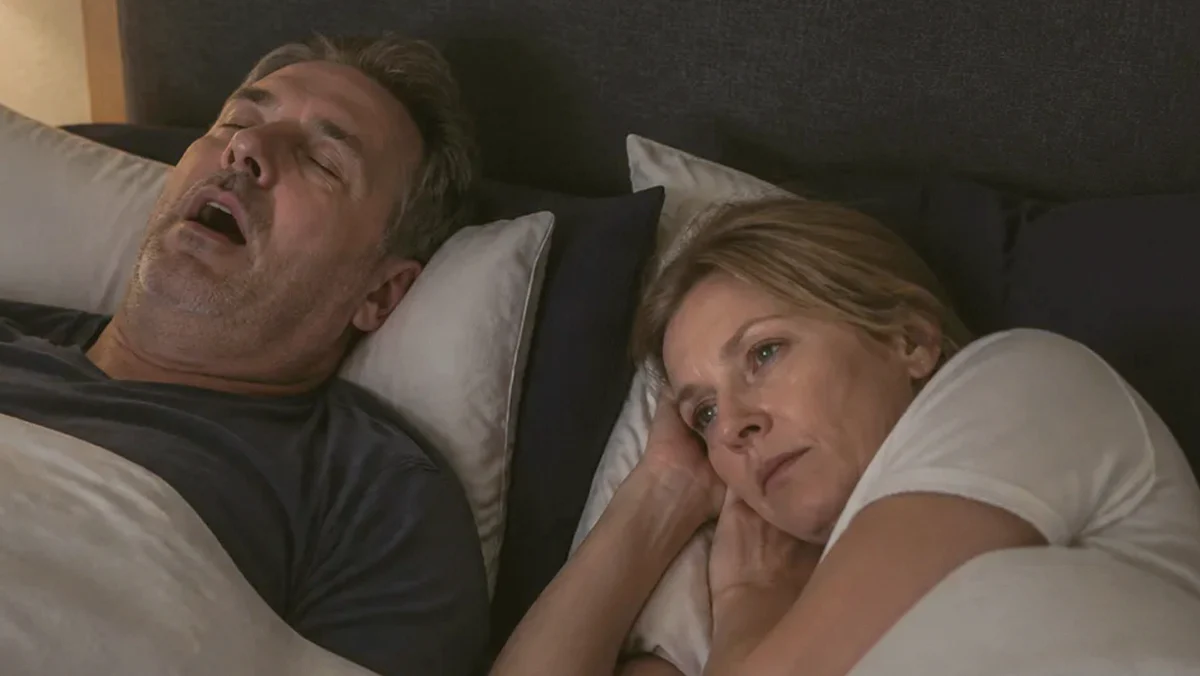
It is worth having snoring examined if your partner notices breathing pauses, or if you have daytime sleepiness, morning headaches, need to pass urine at night or high blood pressure. These can be signs of sleep apnoea. At the consultation I examine the nose, throat and larynx with an endoscope. Diagnosing sleep apnoea and judging its severity needs an overnight sleep study (polygraphy).
Sleep endoscopy (DISE)
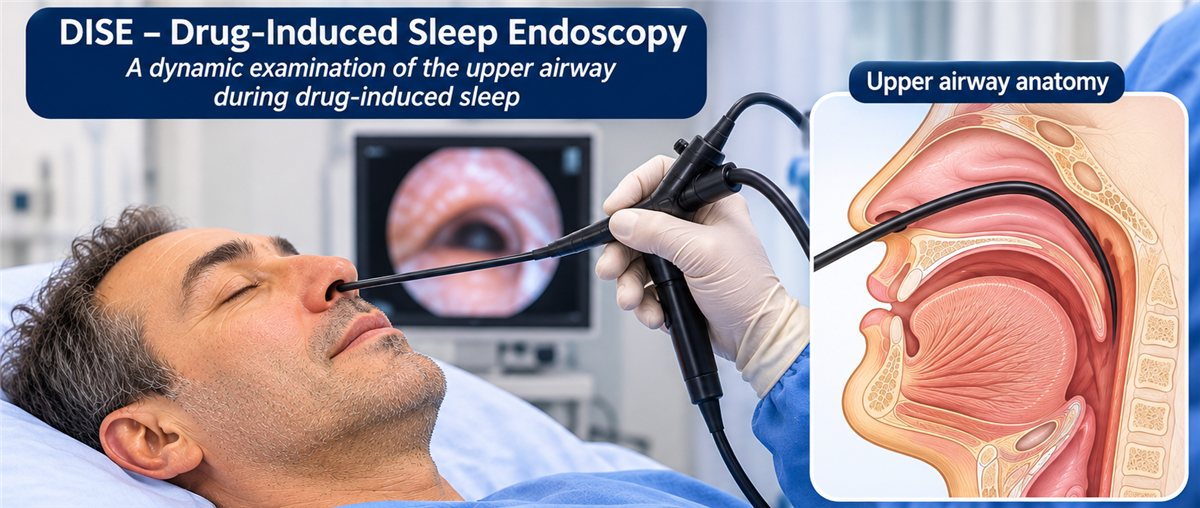
An examination while awake does not reliably show how the throat behaves during sleep. In sleep endoscopy (DISE) the throat is examined during medically induced sleep, showing at which level and in which direction it narrows. The findings often change the surgical plan and help avoid an operation that is unlikely to help.
Treatment options
- Lifestyle: weight loss reduces snoring and sleep apnoea in many people. Avoiding alcohol in the evening and sleeping on your side can help when snoring is worse on your back.
- A mandibular advancement splint reduces snoring and is an option in mild and moderate sleep apnoea.
- CPAP is the first-line treatment for moderate and severe sleep apnoea. It is not meant for snoring alone.
- Surgery may be considered when the site of narrowing is clear, or when a splint or CPAP is not suitable.
Snoring surgery
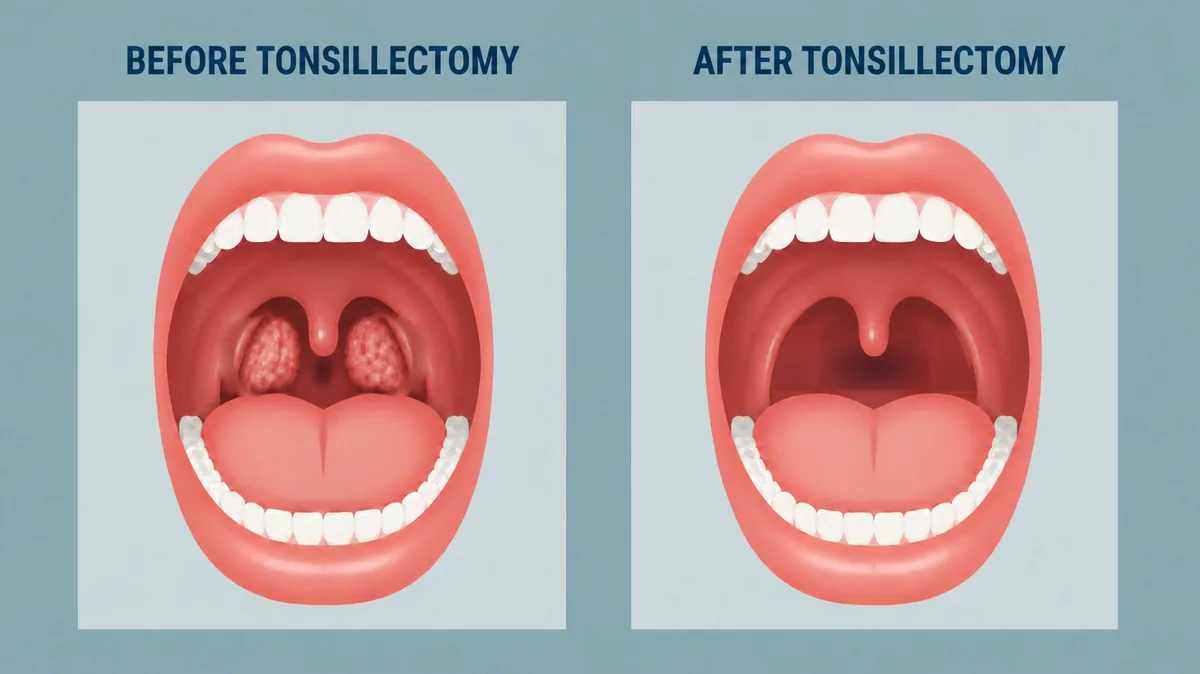
The result of surgery depends on where the snoring comes from. The clearest benefit is usually when large tonsils are the cause. Operations on the soft palate and side walls of the throat, such as barbed reposition pharyngoplasty (BRP) and expansion sphincter pharyngoplasty, are used when the narrowing is at these levels. Results vary from patient to patient, and snoring can partly return over the years. Surgery involves pain, a recovery period and a small risk of bleeding. I go through the benefits and risks with you before any decision. Read more: Sleep apnoea surgery.
Appointments
Appointments at Mehiläinen and Terveystalo in Helsinki. No referral needed.
Frequently asked questions about snoring
No, not for a private consultation at Mehiläinen or Terveystalo.
If you have your own private health insurance, the insurer usually covers the examinations and treatment. Check the terms of your policy.
Snoring alone is usually harmless. If it comes with breathing pauses or daytime sleepiness, the cause may be sleep apnoea, which should be examined and treated.