
Hoarseness and voice assessment
When is hoarseness a reason to see a specialist?
Your voice may become hoarse because of laryngitis, overused vocal folds or external irritants. Most hoarseness settles within a couple of weeks. Hoarseness that lasts longer than three weeks, or that comes with pain, difficulty swallowing, breathing problems or coughing blood, should be examined with videoendoscopy, which I provide in my outpatient clinic.
What causes hoarseness?
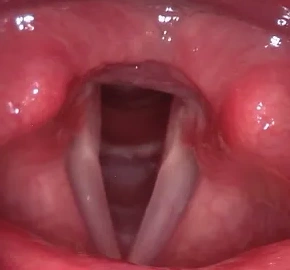
In practice, hoarseness happens when the vocal folds no longer close evenly. Common reasons are inflammation of the vocal folds, a scar, a tumour or another unevenness on the vocal fold edge. Vocal fold paralysis can also cause hoarseness, but it is far rarer. Smoking, acid reflux and heavy voice use are common contributing factors.
The tolerance of the vocal folds differs from person to person, and excessive strain can damage even the best-trained voice.
What happens at the voice assessment?
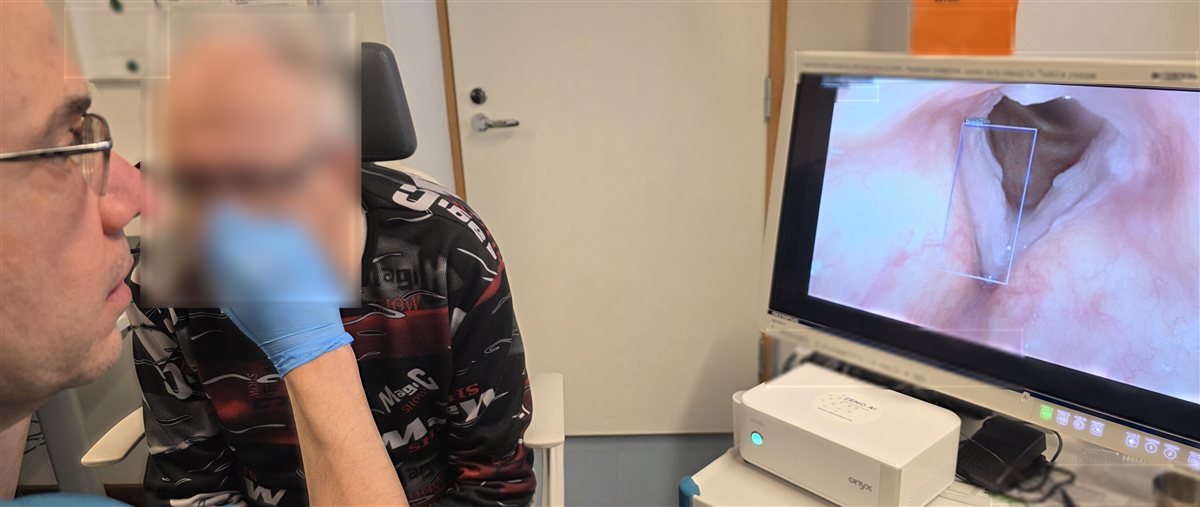
The assessment is done in outpatient consultation. We go through your voice problem and examine your vocal folds with a thin, flexible endoscope passed through the nose. The examination is quick and needs no anaesthesia beyond, at most, a numbing spray. Stroboscopy, which shows the vibration of the vocal folds in slow motion is also part of the examination.
If necessary, further studies in the voice laboratory and an assessment by a speech therapist can be arranged.
After the assessment
You leave with an explanation of what is causing your symptoms and a treatment plan. Depending on the findings this may be voice therapy, medication, an office-based procedure or surgery. Read more: Vocal fold lesions, Vocal fold paralysis, Office-based phonosurgery.
Frequently asked questions
No. You do not need a referral for a private appointment at Mehiläinen or Terveystalo.
The examination is quick. A thin endoscope is passed through the nose, and no anaesthesia is needed beyond, at most, a numbing spray.
When it lasts longer than three weeks, or when it comes with pain, difficulty swallowing, breathing problems or coughing blood.
Dr Ahmed Geneid, a laryngologist, examines hoarseness with video laryngoscopy and stroboscopy at Mehiläinen and Terveystalo in Helsinki. No referral is needed.